
Worn Garage Door Springs
Garage door springs eventually reach the end of their useful cycle life after years of repeated opening and closing.
Local garage door service · Peoria, AZ
Garage door repair and installation for Peoria homes built mostly between 1979 and 2005, covering emergency service, opener installation, opener repair, roller replacement, and the 2000s-era garage door systems common across the area.
Garage door services
From emergency repair and installation to opener work, roller replacement, and general garage door service, the lineup is built around the systems common across Peoria's 2000s-era housing stock.
Common Peoria garage door problems
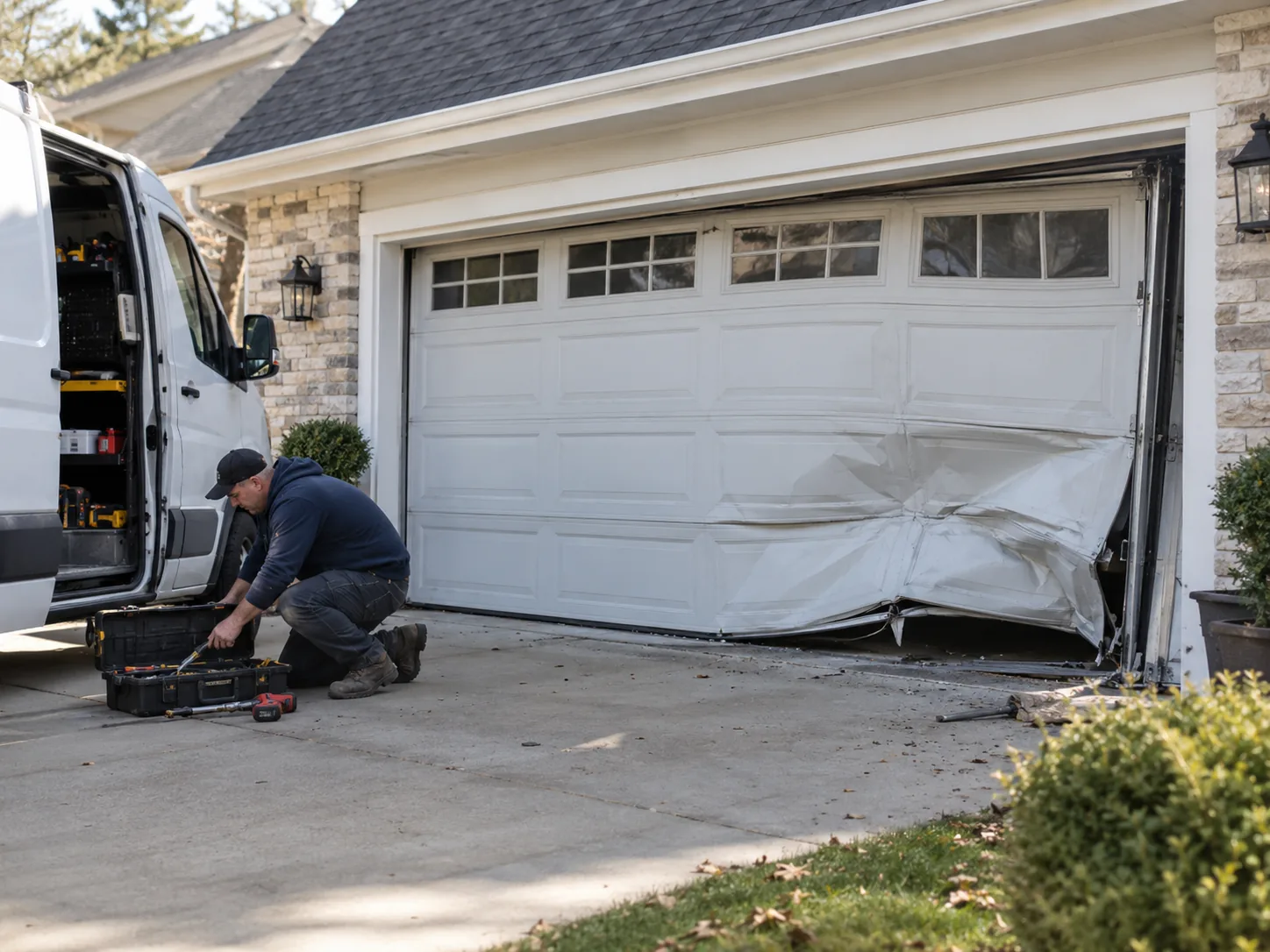
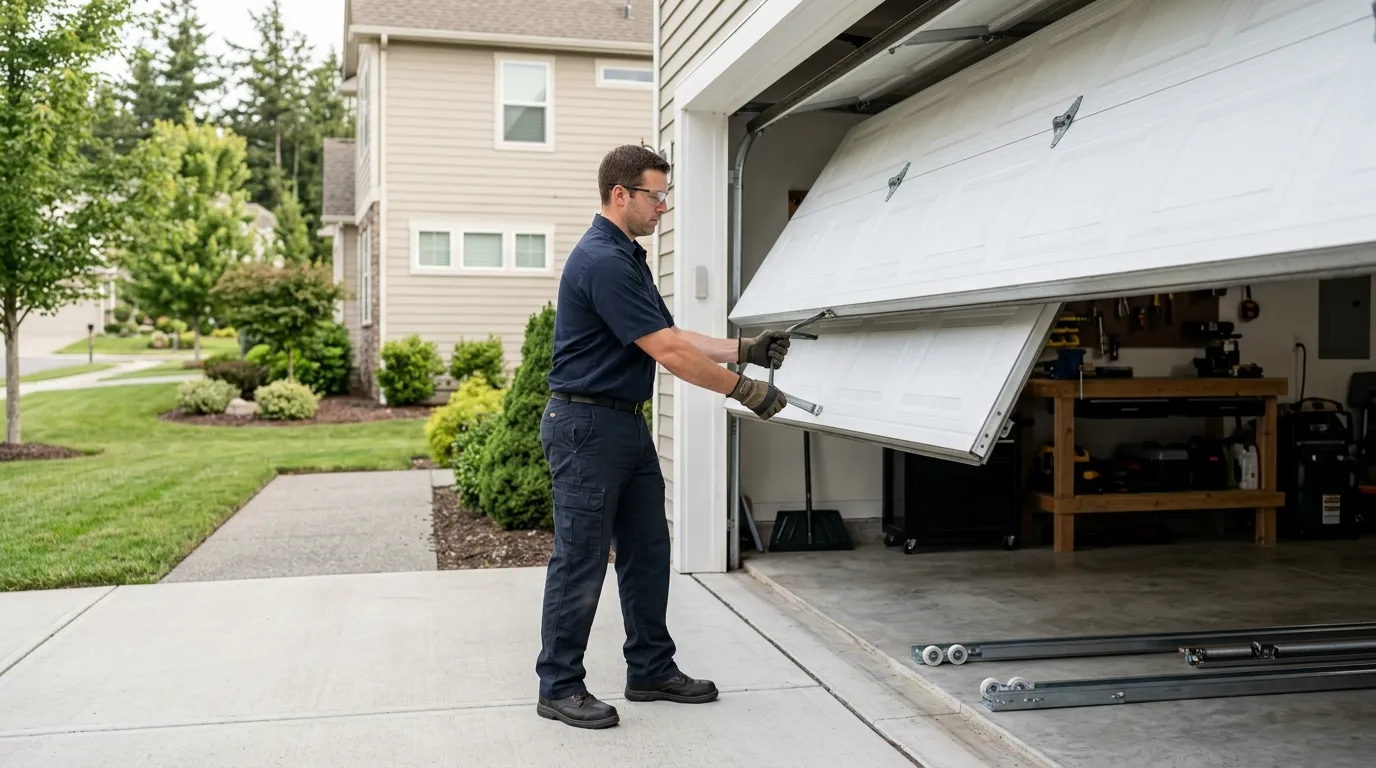
Worn springs, aging opener electronics, roller wear, cable problems, sensor issues, and track alignment problems make up much of the work across Peoria's 2000s-era housing stock. Torsion spring failures are a recurring need across doors exposed to years of regular cycling in the severe-heat climate; older opener circuit boards, logic units, sensors, and controls develop problems as systems age; nylon rollers wear, dry, or crack over time while cables fray after years of repeated lifting; and track alignment and sensor positioning become service issues on doors with years of use — with heat treated as one factor that can expose or accelerate existing wear rather than the cause of every failure.
Garage door springs eventually reach the end of their useful cycle life after years of repeated opening and closing.
Older opener boards, motors, gears, sensors, controls, and other electronics can eventually develop operating problems.
Rollers can become noisy, rough, cracked, damaged, or resistant after years of regular track travel.
Cables can fray, loosen, slip, or fail after years of carrying repeated lifting loads.
Track alignment or sensor positioning problems can interfere with reliable opening and closing even when the main door structure remains sound.
Local housing matters
The broader source service area is dominated by homes built between 1979 and 2005, with a median build year around 2002.
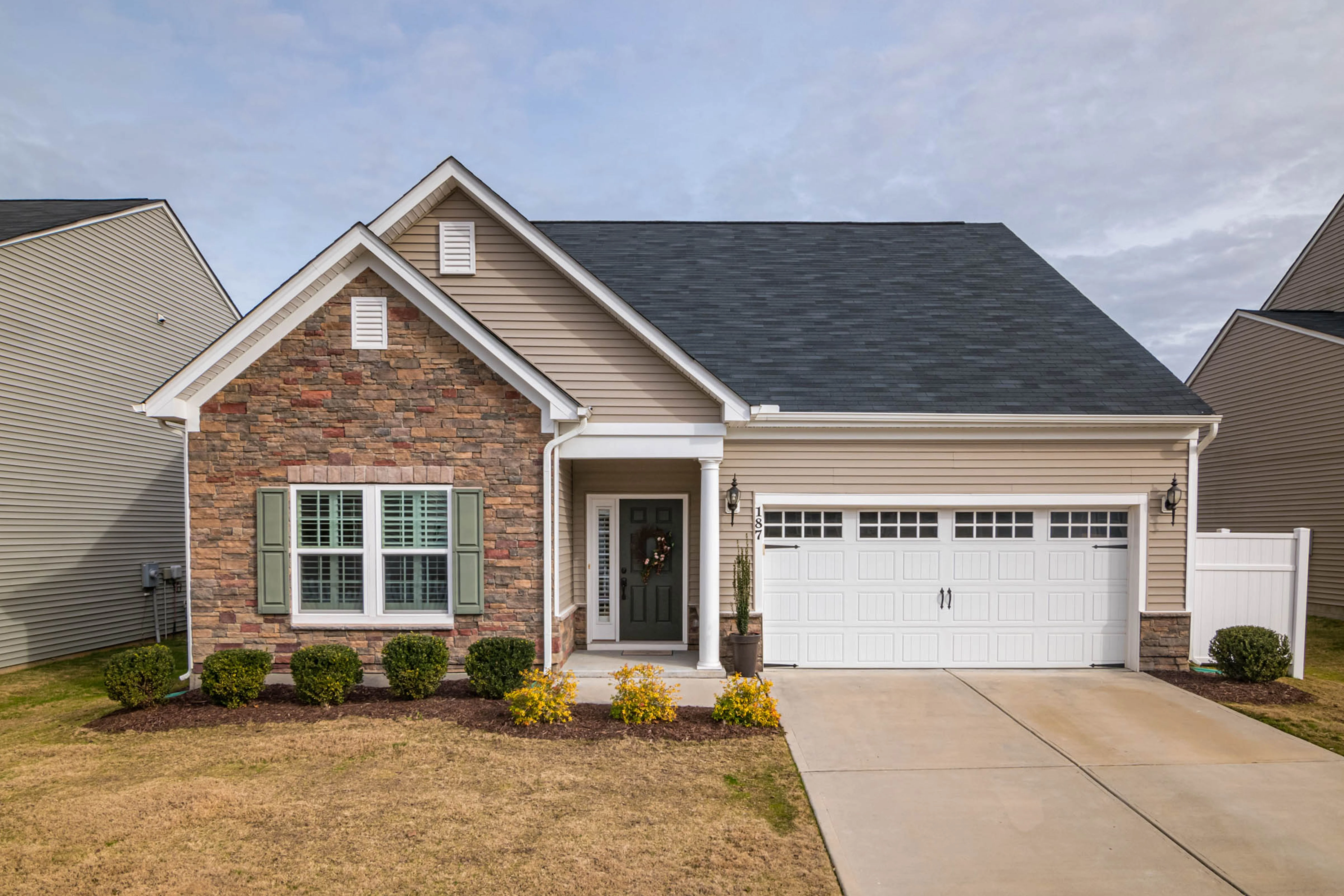
That creates a large number of garages with 2000s-era steel sectional doors, torsion systems, electronic openers, rollers, cables, tracks, safety sensors, and replacement hardware that remains relatively common.
The source describes nine named core areas with substantial late-1990s and early-2000s subdivision development.
Many original springs and openers from that construction period are now reaching ages where repair or replacement becomes more common.
The build year provides useful context, but the correct repair depends on the hardware actually installed today.
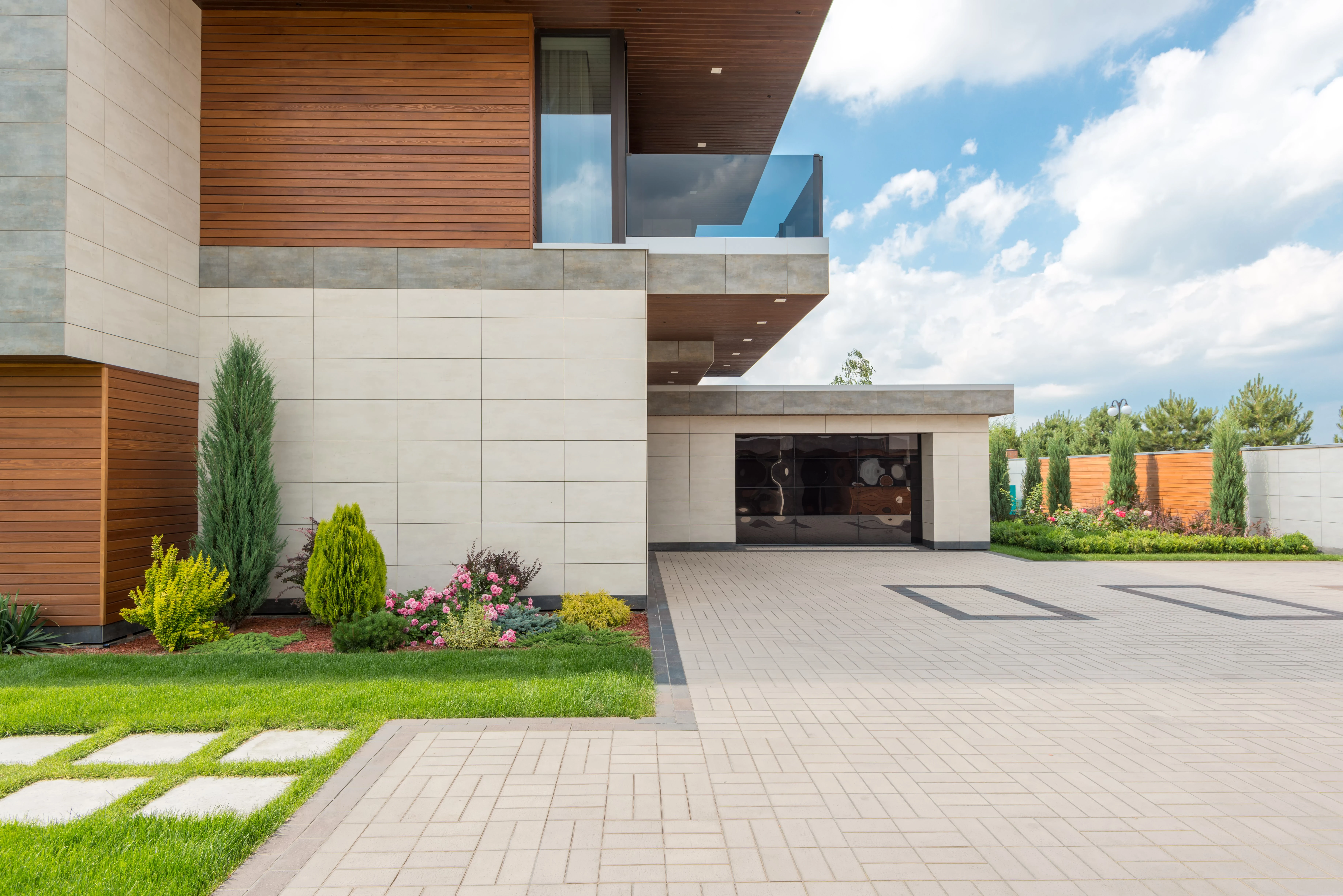
2000s garage door systems
Peoria's newer housing stock means many garage doors use common torsion systems, steel sectional panels, electronic openers, and replacement parts that remain broadly available.
Standard torsion hardware is common across the area's late-1990s and 2000s housing stock.
Most of the local housing profile points toward sectional steel garage doors rather than much older one-piece systems.
Circuit boards, logic units, sensors, remotes, controls, and drive components are common service points on opener systems from this era.
Many components from this build era remain common enough that special ordering is less frequent than on much older garage doors.
Severe-heat garage door wear
Peoria sits in a severe-heat climate band, so long-term heat exposure contributes to faster aging of lubricants, seals, rollers, electronics, and already-worn components rather than heat alone causing every failure.
High garage temperatures and years of regular cycling can make existing spring fatigue more noticeable as components approach the end of their service life.
Plastic, nylon, rubber, and weather-seal components can harden, dry, or deteriorate over long periods of heat exposure.
Older opener electronics mounted in hot garage environments can develop age-related reliability problems over time.
Routine lubrication and proper track alignment remain important where components experience long periods of high garage temperatures.
Clear repair guidance
There isn't one flat repair price, because spring work, roller replacement, opener repair, opener installation, track work, and complete door replacement involve different parts and labor.
Spring configuration, door weight, opener condition, track damage, cable wear, roller condition, and parts availability can all change the scope.
Median household income across the broader service area runs around $74,764, with roughly 40,000 owner-occupied houses.
We inspect the actual door before quoting rather than giving an unsupported number sight unseen.
Older opener electronics can be harder to source, and replacement may sometimes be more practical than repairing a discontinued control board.
Repair or replace?
Many Peoria garage doors use relatively common 2000s-era hardware, so isolated failures can often remain practical repairs. Replacement becomes more sensible when several major components are aging together or an older opener depends on unavailable electronics.
A targeted repair can make sense when the panels, tracks, opener, cables, and surrounding structure remain serviceable.
A steel sectional door with sound panels and tracks can remain worth repairing when one wear component has failed.
Replacement can become more practical when an older opener needs a discontinued control board or logic unit that is difficult to source.
When the opener, springs, rollers, cables, or tracks are all requiring substantial work, broader replacement can offer better long-term value.
What to expect
We start with what the door is actually doing, use the symptoms to point toward the likely cause, check the whole door rather than the single reported symptom, and explain repair versus replacement before work begins.
Tell us whether the door won't open, won't close, makes a grinding noise, has moved off track, or the opener has stopped responding. That symptom is the starting point.
The symptoms can point toward springs, cables, rollers, tracks, opener electronics, sensors, or another operating component.
We check springs, cables, rollers, and track alignment even when the call is about only one symptom.
The findings are explained before work begins, including when an aging opener or door is approaching the point where replacement becomes more practical.
Older Opener Boards May Need Sourcing
Discontinued opener boards and logic units may be harder to source and can change whether repair or replacement is the better option.
Service areas
Questions
The severe summer heat in this area puts a lot of thermal stress on torsion springs, and metal fatigue speeds up with heat cycling. Combined with most doors here being original to construction from the 1979-2005 building boom, a lot of springs are simply reaching end-of-life around the same age, regardless of how well the door's been maintained.
Yes. Vistancia is about 3 miles SSW of us and Trilogy At Vistancia is 4 miles SSW, both well within our regular coverage. Anthem is about 11 miles ENE, and we get out there along with Anthem Country Club a bit further past it.
Depends on the age and what's wrong. If it's a dead board on an opener that's over a decade old, we'll usually recommend replacement instead of repair, since boards for older units are getting harder to find and a patched unit tends to fail again soon. Newer units with a single bad part are usually worth fixing.
It depends on where you are relative to the shop and what's on the schedule that day, but since most of the towns we cover - from Vistancia to Stetson Valley to Anthem - sit within about 20 miles, we're not driving across the whole Valley to reach you.
Ready when you are
Tell us what the door is doing and we'll help you figure out whether you're dealing with an opener, roller, emergency problem, installation need, or another aging component in a 2000s-era garage door system.