
Guide
What That Sound From Your Garage Door Is Trying to Tell You
A grinding, popping, or rattling garage door in Peoria usually points to heat-worn hardware on 1979-2005 stock. Here's what each sound means and what it costs to fix.
Local detail
What Local Conditions Do
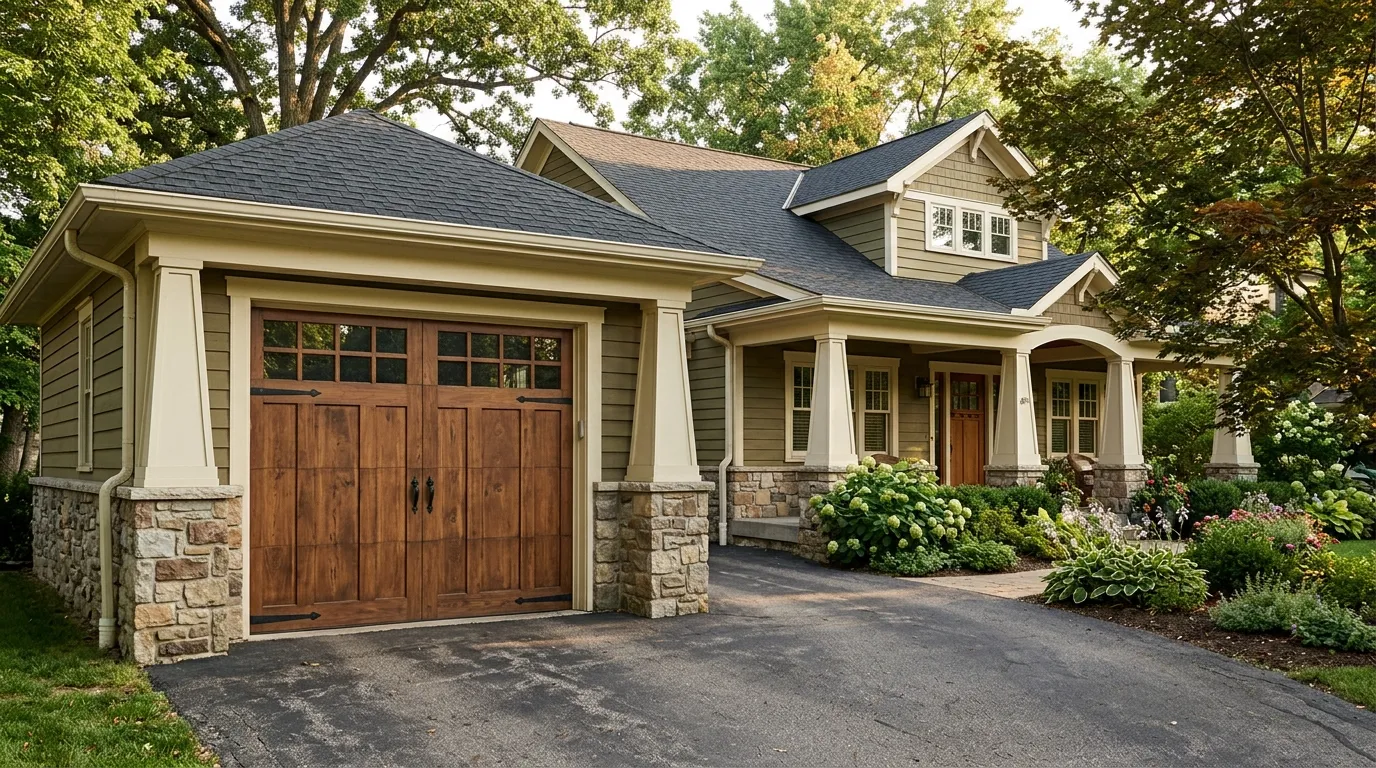
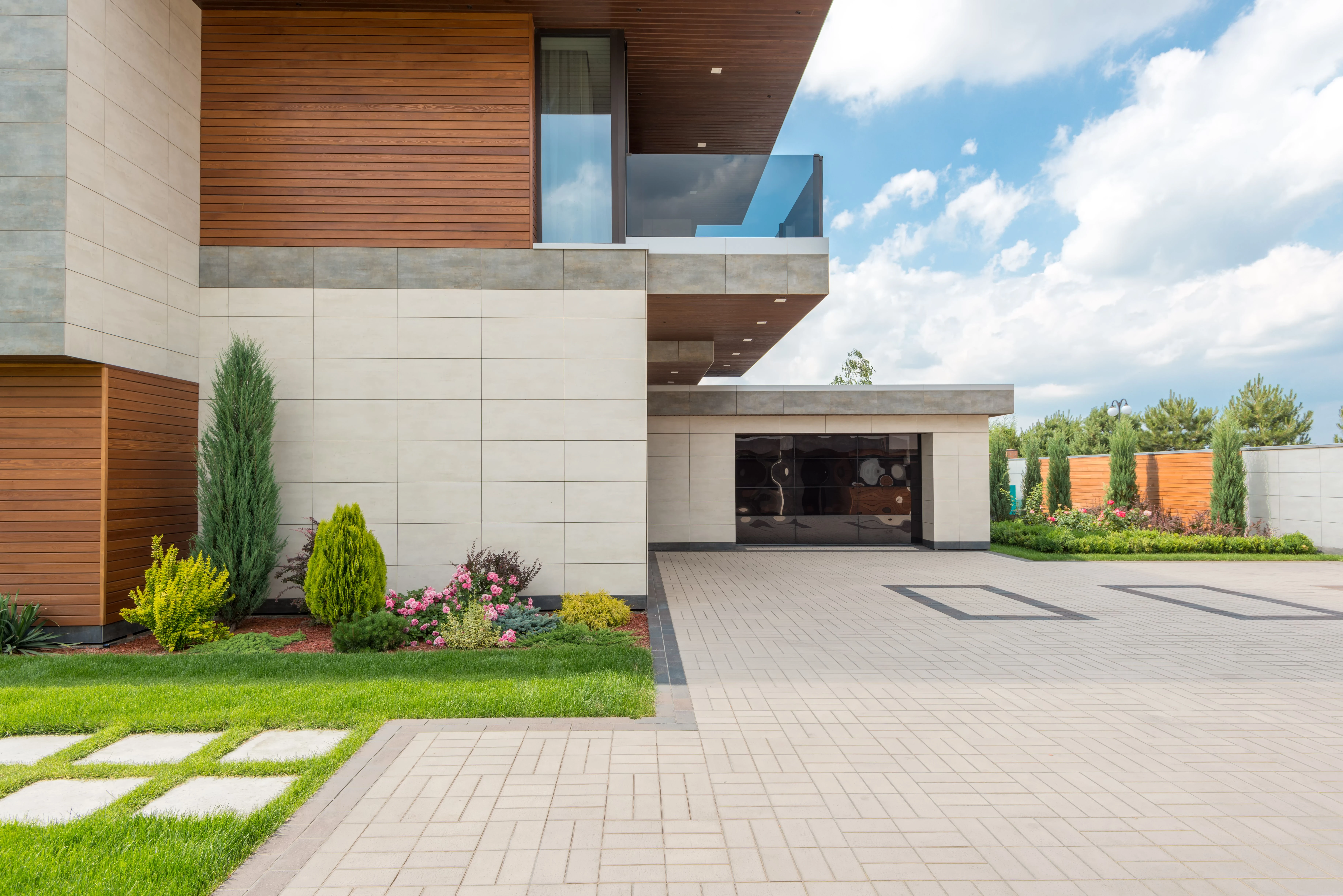
Most of the housing stock in this service area went up between 1979 and 2005, with the median build year sitting around 2002 and the bulk of it concentrated in nine named subdivisions from Vistancia out to Stetson Valley. That matters because a door built for a 2002 house has different hardware than one built for a 1985 house - different spring wind, different roller material, sometimes a different track gauge entirely. Layer on a severe heat climate and you get two things happening at once: steel expands and contracts every single day through the summer, and any plastic or nylon component ages faster than it would somewhere mild. Torsion springs lose tension unevenly.
Roller bearings that were fine in March start groaning by July. None of this is a defect in the door - it's what happens to garage door hardware in a place where the pavement gets too hot to stand on barefoot for four or five months a year. A door that sounds fine in winter and rough in summer isn't broken, it's telling you the heat finally caught up with a part that was already close to done.,
The area
The Cost of This Job
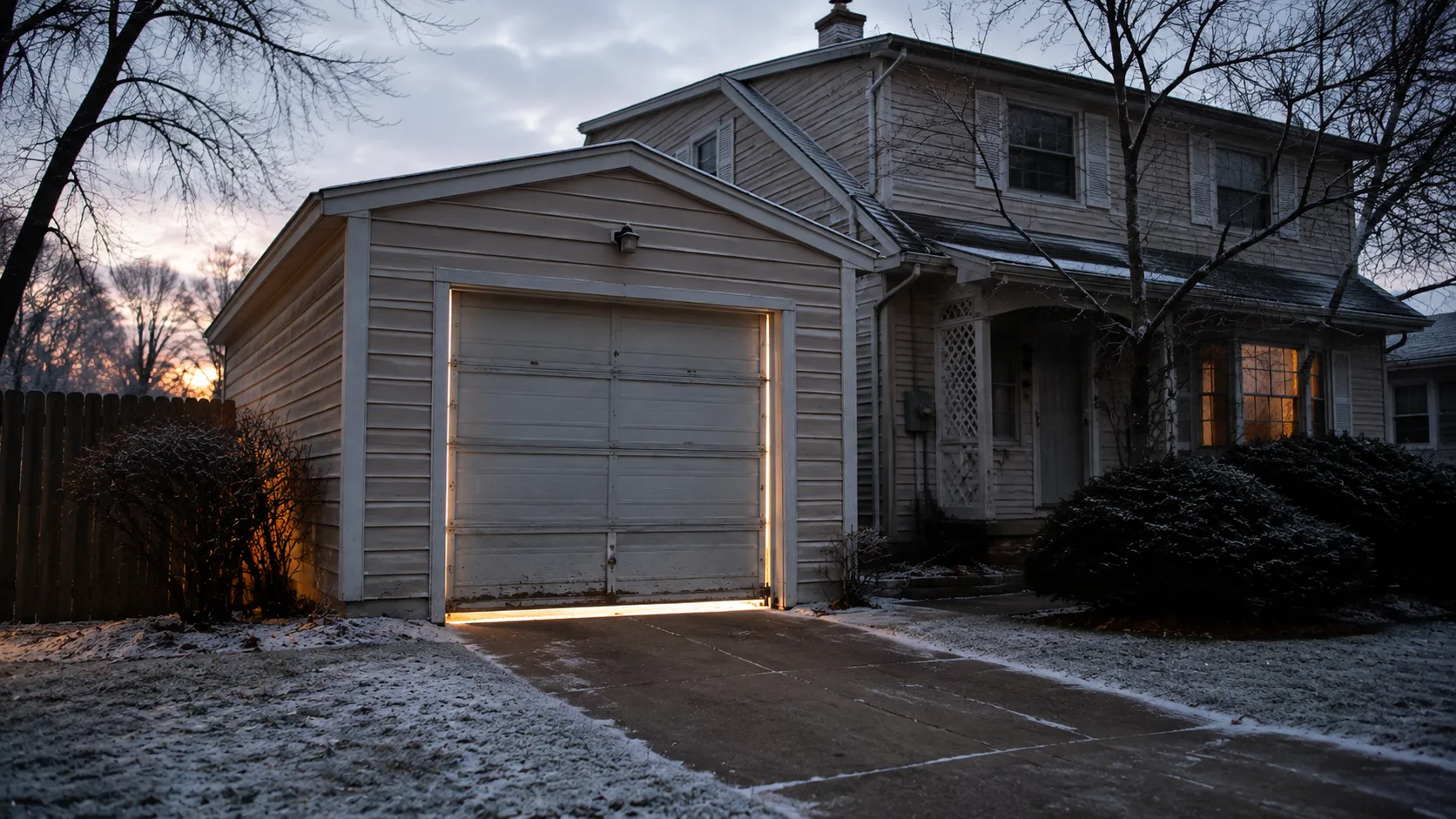
We don't publish a flat number here because the fix depends entirely on what's actually failing, and that varies a lot across a service area with roughly 40,189 owner-occupied houses spanning builds from the late '70s through the mid-2000s. A worn roller on a 2000s-era door is a small job. A torsion spring on an older track system, or an opener whose gears have finally given out after two decades of Arizona heat, is a bigger one.
Household income across the area sits around $74,764, and most of the jobs we quote land in a range that reflects a repair, not a full system replacement - but we won't guess at your number over a description of a noise. The honest answer is that we tell you the price after we've looked at the drum, the cable, the hinges, and the opener, not before. If a repair is going to cost close to what a new door would run, we'll say so plainly instead of patching something that's going to fail again in a year.
What we find
The Seasonal Bit
Severe heat doesn't just wear parts out, it changes how they behave hour to hour. Steel track expands in the afternoon and contracts overnight, and if a door was already a little out of alignment, that daily swing turns a quiet rattle into a full clank by August. Openers work harder too - the motor housing sits in a garage that can run twenty or thirty degrees hotter than the outside air by mid-afternoon, and that heat load is exactly the kind of stress that shortens the life of gears and capacitors that were already old.
We see the same pattern every year: calls pick up hard in the hottest stretch of summer, not because doors break more often in some random way, but because heat is the thing that finally pushes a marginal part past the point where it can keep working quietly. If your door has been getting louder as the temperature climbed, that's not your imagination - that's the material responding to exactly what this climate does to it every single year.
How we work
What Is Going On
A metallic grinding usually means a roller bearing or a bent track, more common on older stock where the original hardware has been running for two or three decades without a swap. A loud bang or pop, especially on a double door, is almost always a torsion spring - and on a broken spring, the door is not safe to run until it's replaced, full stop. A rhythmic clunk once per rotation points to a bad section of track or a roller that's cracked, which shows up more on 2000s-era doors once the factory rollers finally wear through.
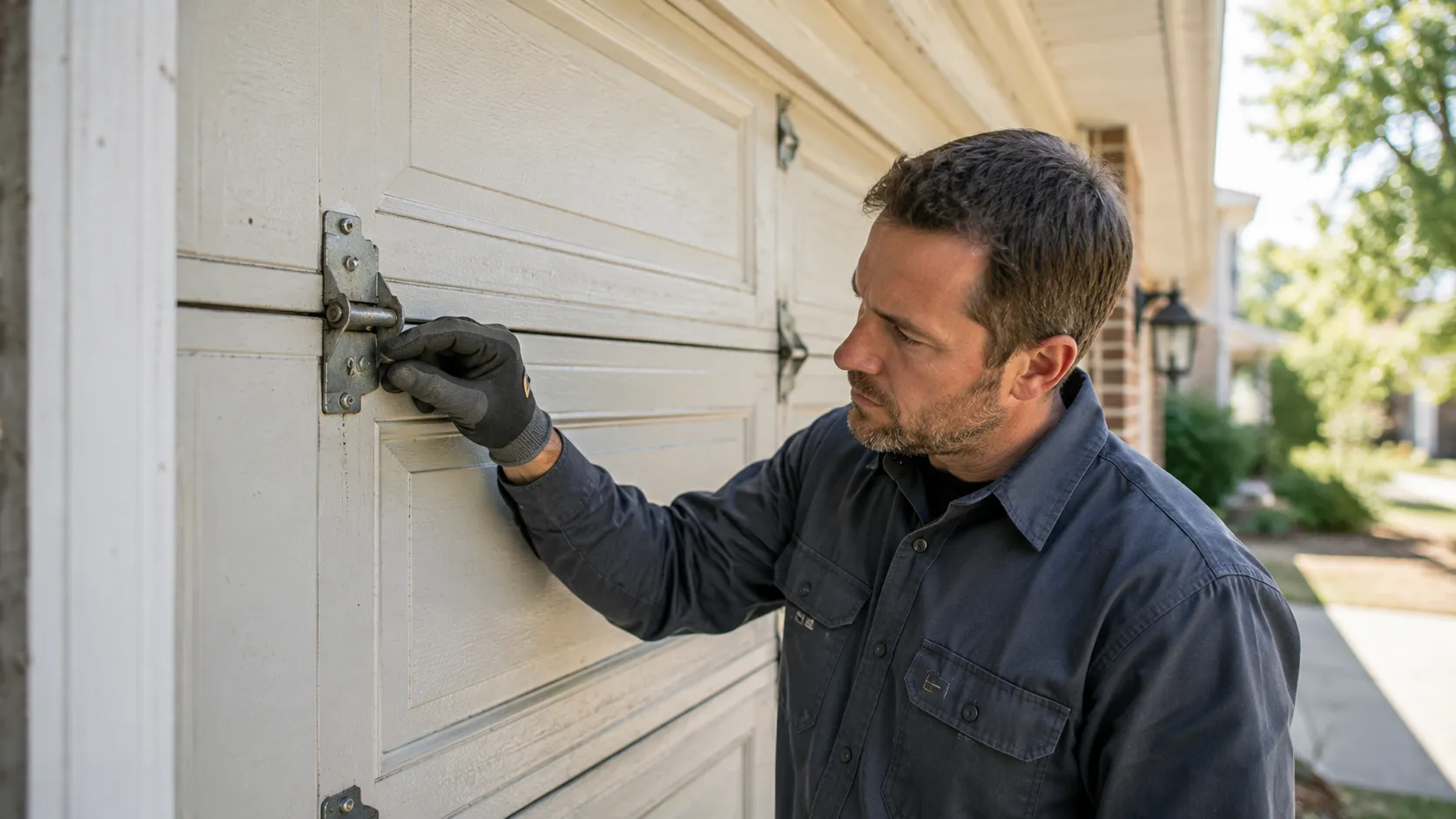
A high rattle that gets worse in the heat of the day is frequently loose hardware - hinges, brackets, the stuff that's supposed to be torqued down and slowly isn't. We won't tell you every noise means a spring, because it doesn't, and we won't tell you every noise is nothing, because sometimes it's the last warning before a cable lets go. If you're not sure which one you're hearing, describe it when you call and we'll tell you honestly whether it can wait or not.
Questions
Common questions
Why does my garage door only make noise in the summer?
Steel track and opener components expand under heat, and any part that's already a little worn - a roller, a hinge, a spring under tension - shows that wear more when it's expanding and contracting through a 100°-plus day. It's not new damage, it's existing wear becoming audible under the heat this area gets every summer.
Is a grinding noise different from a popping noise?
Yes. Grinding is almost always a bearing or roller problem, common on older track hardware. A pop or bang, especially on a double door, usually means a torsion spring has gone or is about to. Treat a pop as urgent - the door shouldn't be run again until a spring is checked.
Do you charge for a diagnostic visit?
We don't quote a number over the phone based on a description of a sound, because the fix ranges from a $ small roller swap to a full spring or opener replacement depending on what's actually worn. We look at the door first, then give you a price before doing any work.
Ready when you are
Need a garage door sorted in Peoria?
Peoria Garage Door Pros repairs and installs garage doors, springs and openers in Peoria, AZ and the surrounding area.