
Core material and opener coupling
What drives the number on your job is door style, whether you want a polyurethane-core panel versus a hollow one, and whether the opener gets swapped at the same time.
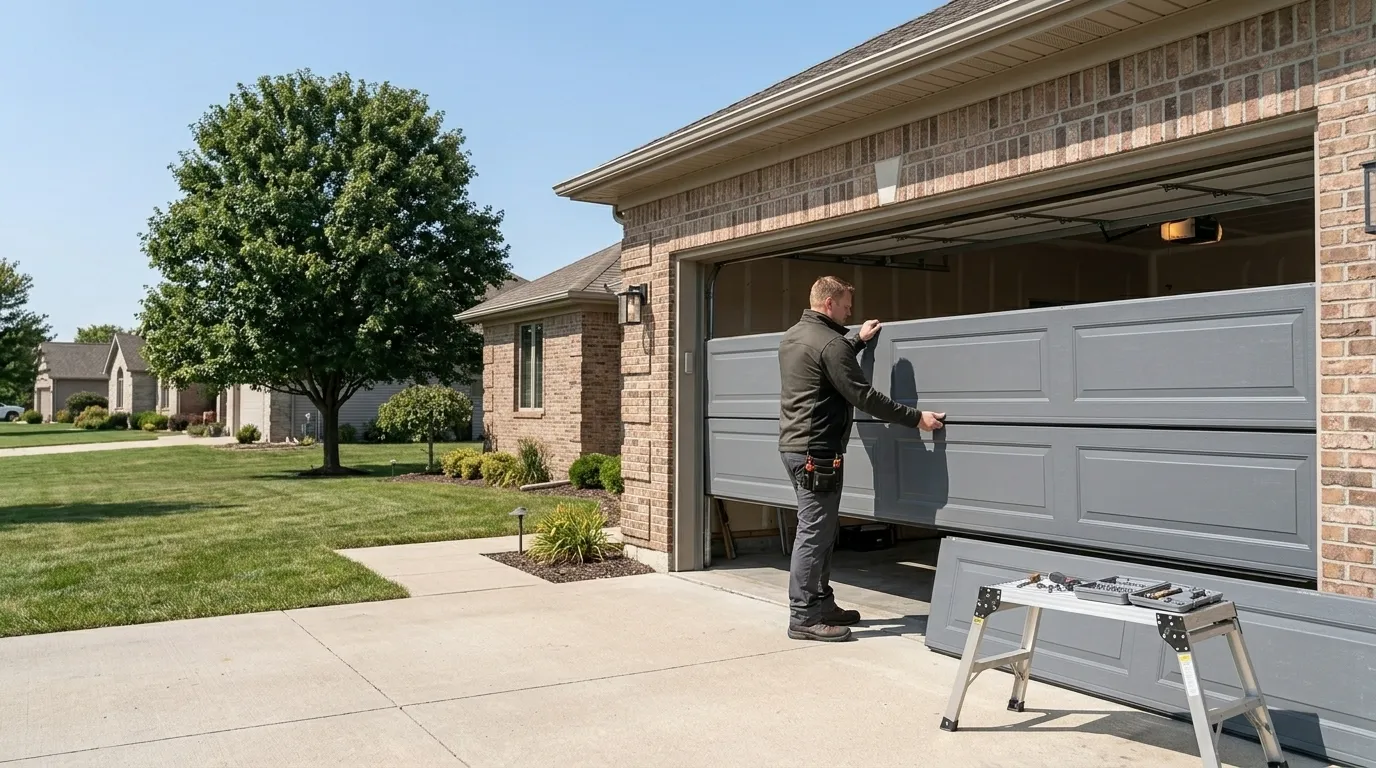
Anthem, Peoria
Anthem homes built after 2000 need garage door hardware sized for extreme summer heat. Peoria Garage Door Pros installs and sets up new doors 11 miles away.
Pricing
We don't post a flat number for this job because Anthem's housing stock isn't uniform enough to make one honest. Most of the neighborhoods here went up between the late 1990s and mid-2000s, and a builder-grade steel door from that run costs less to replace than the insulated, wind-rated doors that make sense in a heat-severe climate zone.
What drives the number on your job is door style, whether you want a polyurethane-core panel versus a hollow one, and whether the opener gets swapped at the same time.
A double door with a heavier torsion spring set and a new opener runs more than a single door with the old opener reused. We'll give you a real number after we look at your opening, your existing track, and what's actually failing - not a range pulled from a website.
If your current door is original to a 2003 or 2004 build, expect the springs and rollers to be part of that number even if the panel itself still looks fine, because 20-year-old torsion springs are close to the end of their cycle count regardless of appearance.
Booking
We run out of Peoria, about 11 miles from Anthem, so we schedule the job before we load the truck - there's no local branch to walk into.
Call and tell us what you're looking at: a door that won't lift evenly, a panel that's cracked, or a straight swap because you want something better suited to the heat than what the builder put in.
We'll ask the size of the opening, single or double, and roughly how old the house is, since that tells us a lot about what hardware is currently on the header. If you know your home was part of the early-2000s build-out common across this area, say so - it saves a trip just to measure.
We confirm the door style and options over the phone or by photo before we come out, then set an install date. There's more on what we do across the wider service area on our Peoria installation page, and general background on how we work in Anthem specifically.
DIY or pro
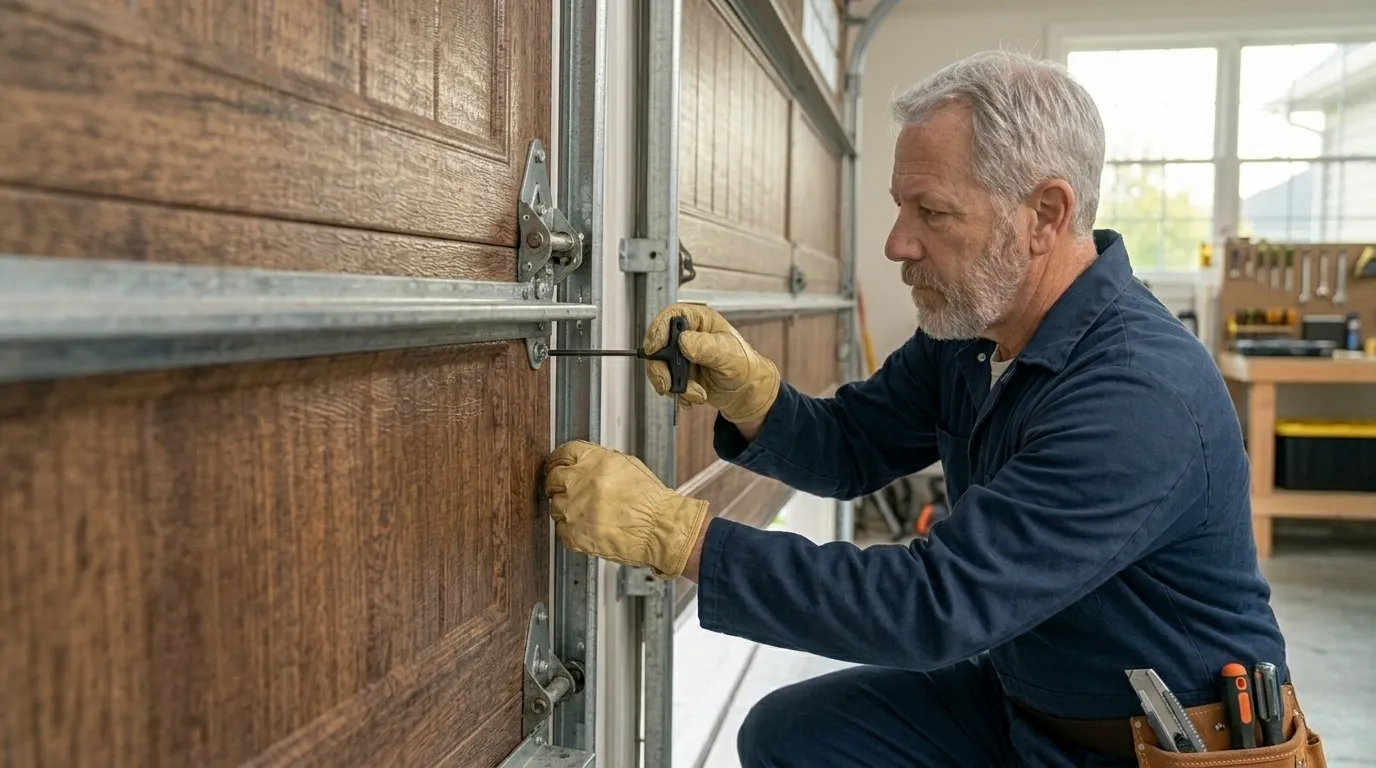
A garage door panel swap looks simple until you're standing under a torsion spring wound tight enough to break a wrist if it slips off the winding bar.
That part of the job we don't recommend as a DIY project, full stop - it's the single most common ER story in this trade. Where a homeowner can reasonably do their own work: weatherstripping, lubricating rollers, tightening loose hinges, or replacing a keypad.
Where it stops being reasonable: anything involving the spring, the cables, or resetting a door to a new opening size. If your Anthem house has its original builder door from the early 2000s, the spring on it has likely done two decades of cycles in triple-digit heat, which is harder on galvanized wire than a mild climate.
That's wear you can't eyeball accurately from the garage floor. We're honest that a straightforward panel-only swap on a door already sized correctly is sometimes a job a handy owner can manage with a helper - but we still get calls to finish what started as a weekend project.
Warning signs
Most of Anthem's housing dates to roughly 2004, sitting inside the broader area's 1979-to-2005 build window, and that shows up directly in the doors we get called on.
A lot of these are the original steel sectional door that shipped with the house - single-layer, minimal insulation, sized for a climate that wasn't expected to hit the summer highs this region actually sees.
Twenty years of that heat cycling the panel expand and contract daily leaves hairline stress cracks near the hinge points and warping along the bottom section. You'll notice the door binding on the track in the afternoon and running freer once things cool - that's the panel itself flexing, not the opener.
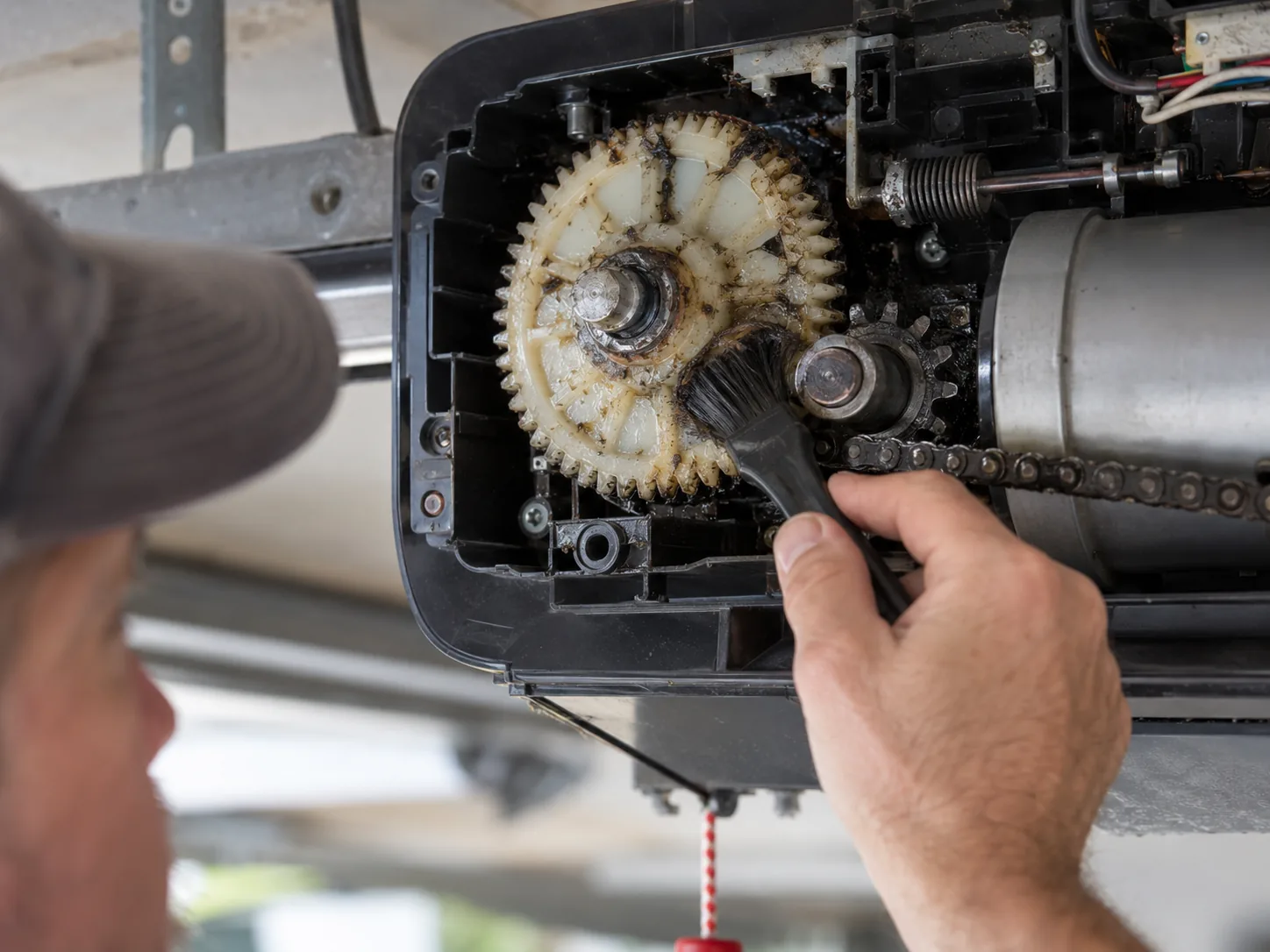
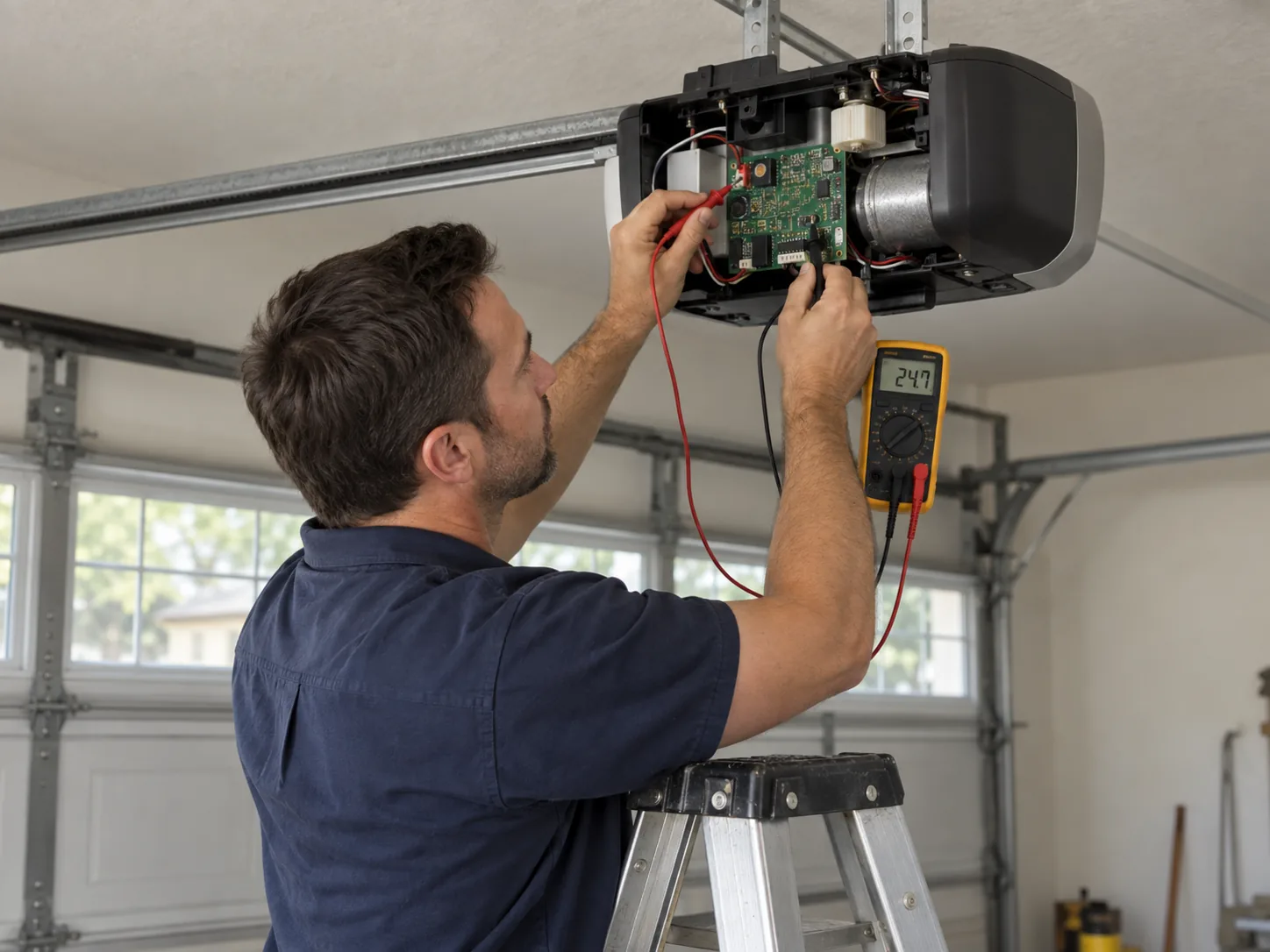
Torsion springs from the same era are usually original too, and spring steel doesn't age well after 20 years of triple-digit garage temperatures. If your opener still uses an older logic board without rolling code security, that's another builder-era holdover worth mentioning while we're already out there.
Watch-outs
The heat is the recurring theme on installs out here, not the wind or rain you'd worry about elsewhere. A non-insulated replacement door on a house that already runs hot inside the garage does nothing to fix the problem that got you calling - it just delays the next call. Sizing is another spot where things go wrong: if the original opening was framed slightly out of square, which happens on builder-grade construction from a fast build-out period, a stock door can bind unless it's shimmed and leveled correctly during install. Springs sized for the old door's weight won't necessarily balance a new insulated door, which is heavier - get that wrong and the opener strains against a door that's fighting its own springs. We also see owners want to keep an original opener because it still works, without accounting for the fact that a heavier insulated panel needs more lift force than a light builder-grade one did in 2004.
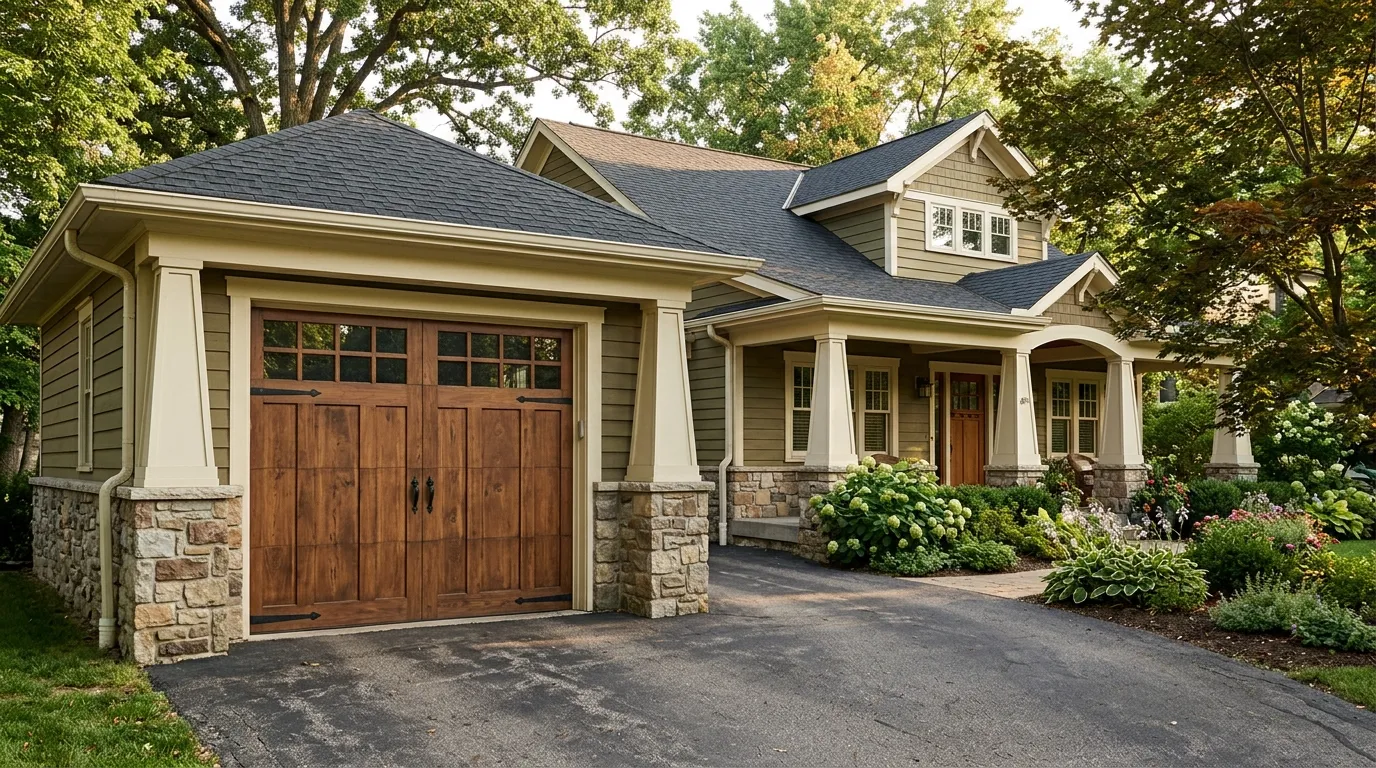

Our process
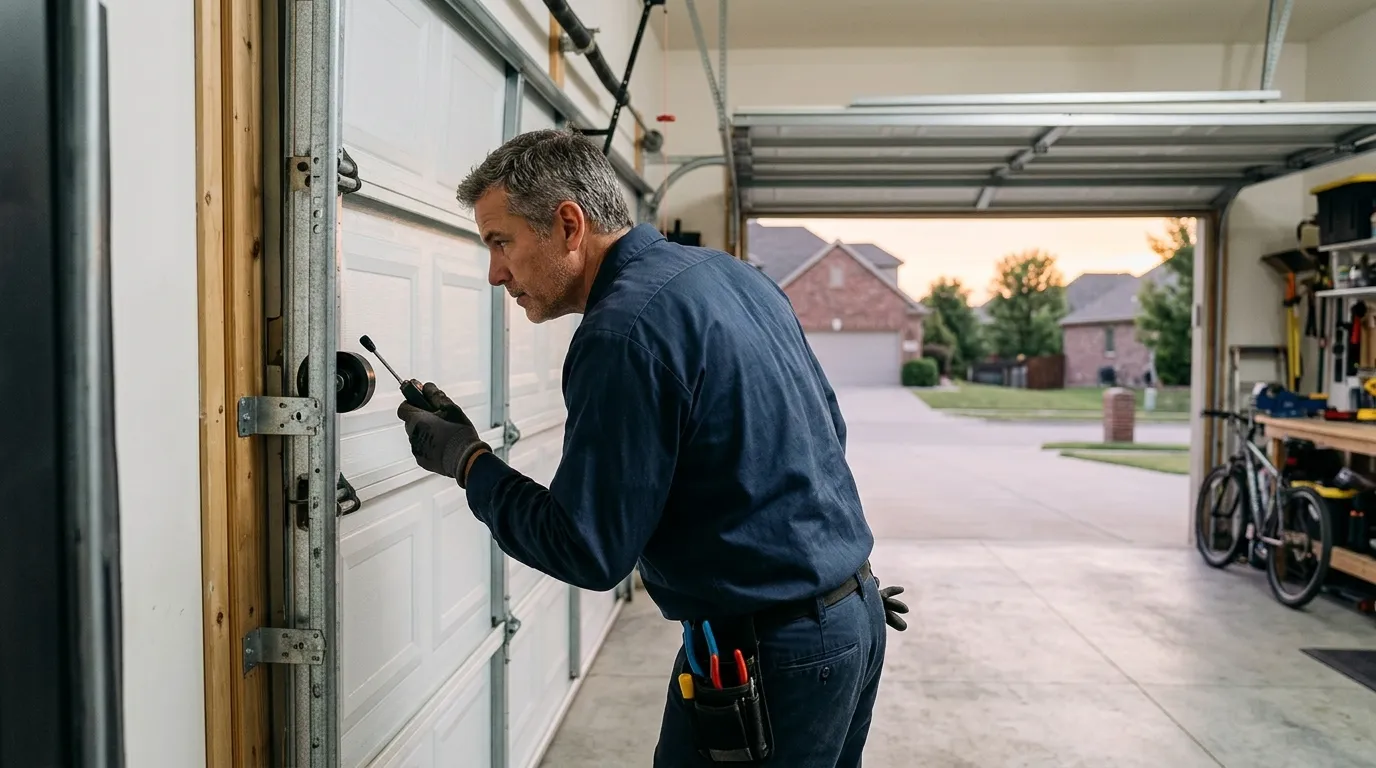
We spec the new door and spring set for the actual weight of what's going up, not the weight of what came down - that's the step that gets skipped in a rushed swap. For a house in this heat band, that usually means steering toward an insulated panel and a spring rated for the added weight, then testing the balance point by hand before the opener ever gets connected. We check the header and track alignment against the actual framed opening rather than assuming it matches spec, since a lot of the housing stock here was built fast during the same 2000s stretch and openings aren't always perfectly square. Once the door's up, we set the opener's force and travel limits to match the new weight, not the old door's settings, and run it through a full cycle count before we call the job done. If your opener predates rolling-code security, we'll flag that separately - it's not part of a door swap, but it's worth knowing about while the garage is open.
Questions
About 11 miles from our shop in Peoria. We schedule installs in advance since we're coming from there rather than a local branch, so there's no walk-in counter to visit - just call ahead and we'll set a date.
If the house dates to around the early 2000s, which covers a lot of Anthem, the door and springs have likely done 20 years of cycles in serious summer heat. At that age we usually recommend replacement over repair, since a repaired spring on an old door still leaves you with a non-insulated panel.
Given how hot garages run here, an insulated panel makes more sense than the single-layer steel door a lot of these houses came with originally. It won't fix your AC bill, but it keeps the garage itself from turning into an oven that radiates heat into the house.
Sometimes. It depends on the age of the opener and the weight of the new door - a heavier insulated panel needs more lift force than a builder-grade door from 2004 was designed around. We check the opener's rating before deciding whether it can stay.
Explore more
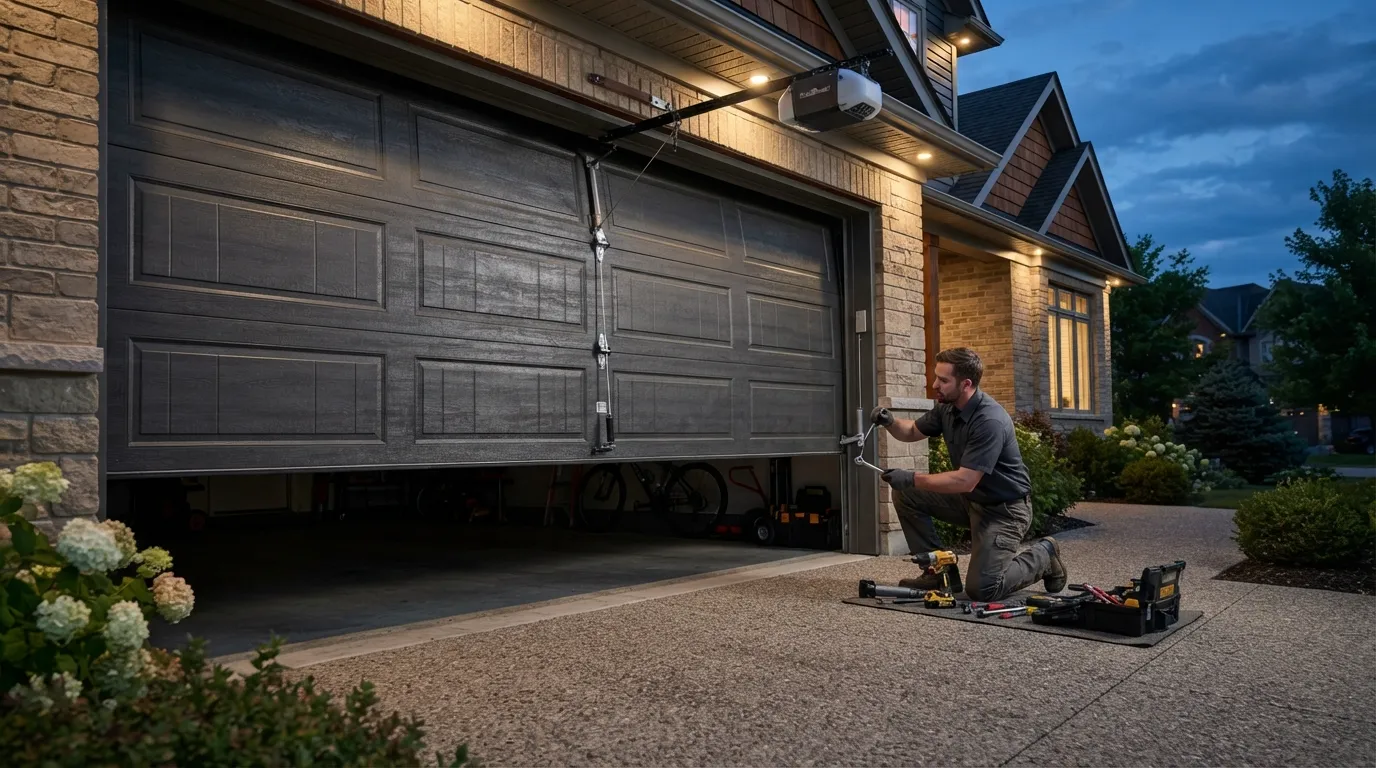
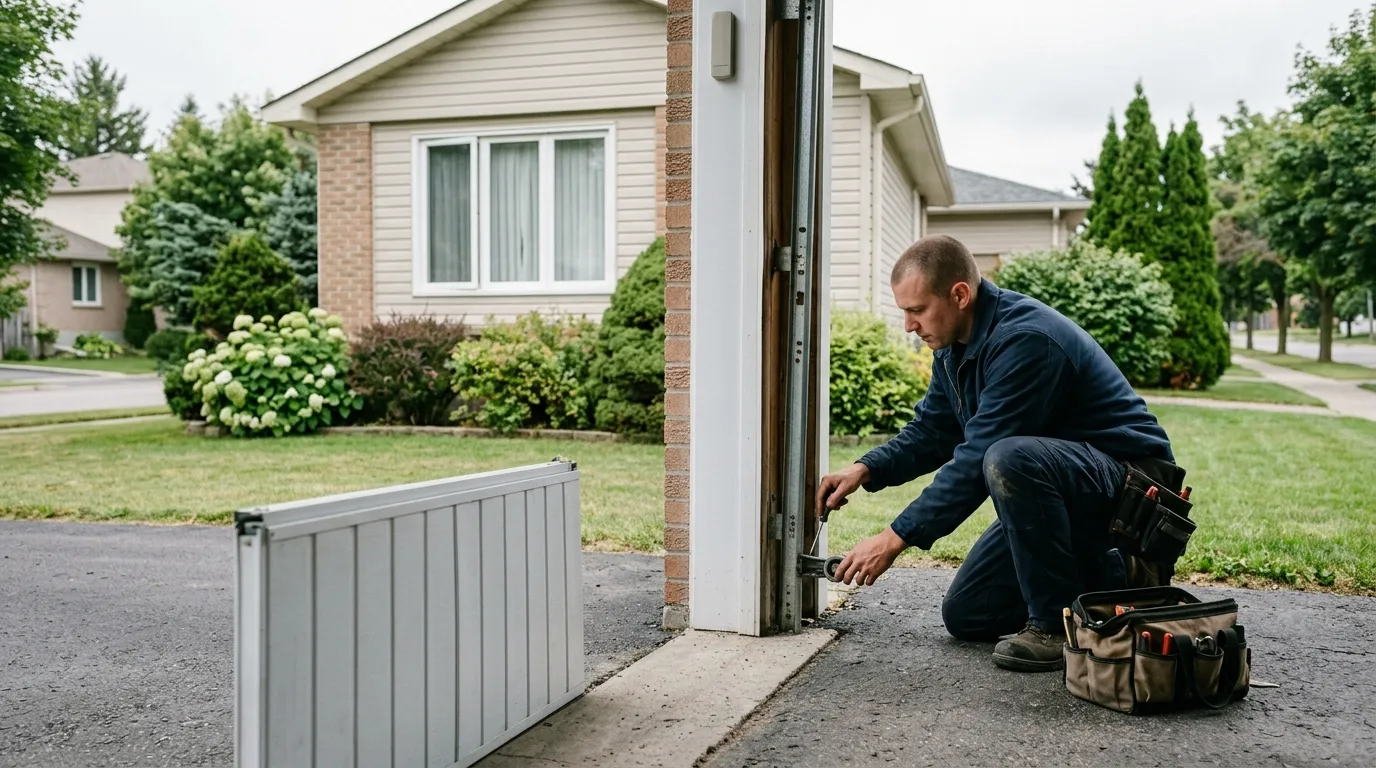
Ready when you are
Peoria Garage Door Pros repairs and installs garage doors, springs and openers in Peoria, AZ and the surrounding area.